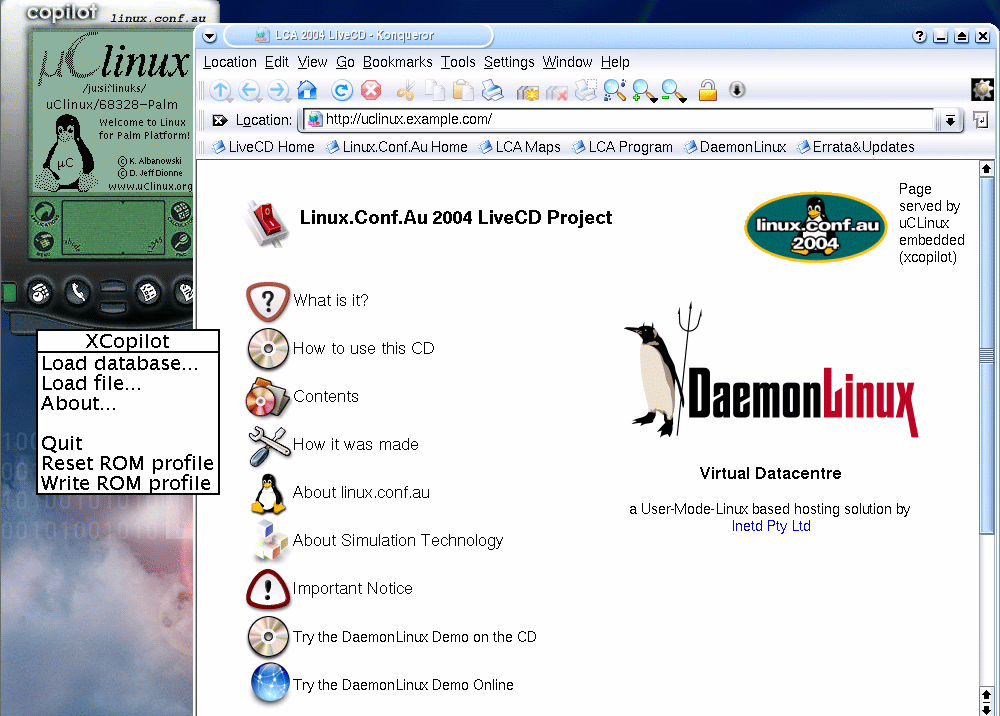
The image below shows a home page served by a Palm Pilot ↗, once a popular handheld device.
The Inetd linux.conf.au LiveCD immersed conference attendees in the talks by letting them run the speakers’ software. We gave all attendees at the 2004 linux.conf.au in Adelaide a bootable CD containing a heterogeneous network of virtual computers running different operating systems, pre-configured with the speakers’ software. I built the Inetd linux.conf.au LiveCD ↗ by modifying Knoppix ↗. Screenshots were in my Tunnelling Hardware over SMTP ↗, selected for a re-run as one of the “Best Of” papers.
In 2026 we could update this by running an entire network in the browser with JSLinux by Fabrice Bellard ↗, a fast browser-based emulator developed and optimised over many years.
Boot the talks
The LiveCD project page described the problem as:
Wow that was a nifty talk, I’ll try out that kernel patch/beta version/new thing just as soon as I get two days to learn how to install and drive it.
The project removed that installation barrier by distributing working environments with the talks, bootable on most laptops.
The conference hackers invitation ↗ asked for help building it and described the appeal: The LiveCD would let us run a collection of unlikely systems for conference delegates to investigate the consequences.
Parallel and nested virtualisation in 2004
The welcome page looked like an ordinary web page, but its web server ran inside uClinux on an emulated Palm Pilot. Palm Pilot devices used a Motorola 68000-family processor without a memory-management unit, which made uClinux suitable. A virtual serial port and PPP connected the Palm Pilot to the rest of the virtual network.
The disc also included:
- several User-Mode Linux computers running Debian on a virtual network;
- Bochs emulating a PC and booting NetBSD;
- Hercules emulating a dual-processor IBM S/390 mainframe and running Linux/390;
- multiple graphical desktops and virtual consoles;
- the DaemonLinux virtual data-centre demonstration from Inetd.
Inetd was the company and conference sponsor, promoting their DaemonLinux services.
Canberra Linux User Group member Steven Hanley kindly said:
That would be the inetd/shearer.org livecd, Sun sponsored other things at LCA 04 but not the livecd. However yeah sure when we get back to Canberra I am sure there will be many people willing to burn copies, Dan Shearer has done a great job getting this thing made.
A mainframe on the laptop
Hercules emulated an IBM S/390 mainframe on the ordinary 32-bit Intel computer running the LiveCD. Its Hardware Management Console initially showed an idle processor, waiting for the Initial Program Load command that corresponds roughly to booting a computer.
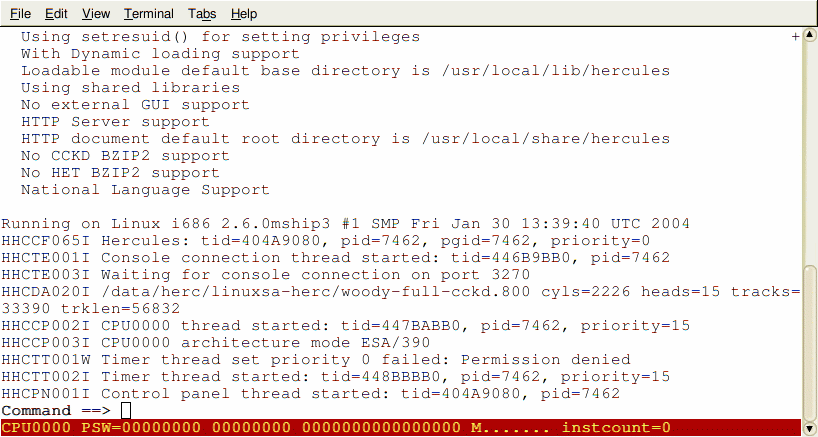
After IPL 0800, Linux/390 booted and reported two S/390 processors. The host underneath was a single-processor 32-bit Intel machine.
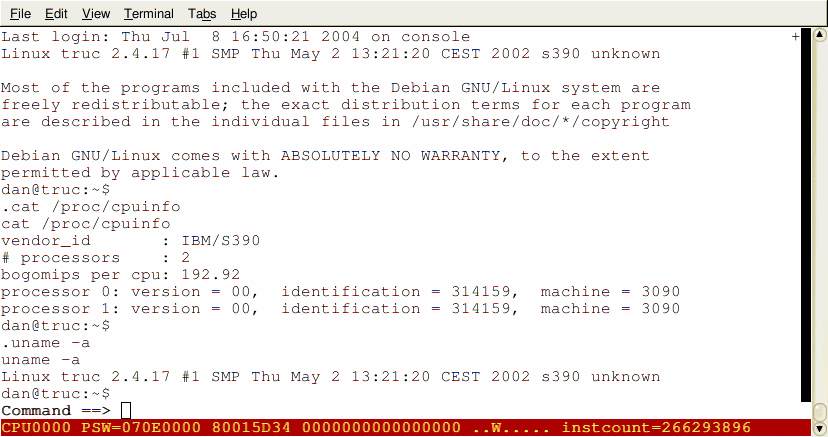
/proc/cpuinfo reports a dual-processor IBM S/390.